Safety + Tips
#1
Eye Safety

How to observe the eclipse without damaging your eyesight
Watching a solar eclipse is only safe when using systems that reduce the light and block harmful radiation.
Here you will find the advice you need to observe the eclipse in complete safety, from how to choose glasses with a certified solar filter to indirect projection methods that allow you to enjoy the phenomenon without putting your eyesight at risk.

Safety is essential
Watching a solar eclipse without following the safety instructions can damage your eyesight irreversibly. That is why it is so important to take the safety measures detailed below.

What is safe?
Certified eclipse glasses
- Check that they clearly indicate compliance with standard EN ISO 12312-2:2015
- They bear an authentic CE marking
- The manufacturer’s name is clearly visible
- They include instructions for use, warnings and, where applicable, an expiry date
Also check that the filter is in good condition, with no scratches, bright areas or visible damage. If any of these conditions is missing, do not use them.
Specific solar filters
Specific solar filters for telescopes, binoculars or cameras, always placed on the front of the instrument.
Do not look directly at the Sun
Project the image of the Sun onto a screen and look at the screen; never look directly at the Sun.
Use certified glasses and specific solar filters
Avoid looking directly at the Sun and use certified glasses and solar filters specifically designed for that purpose.
It is important: for your safety and to protect your visual health.
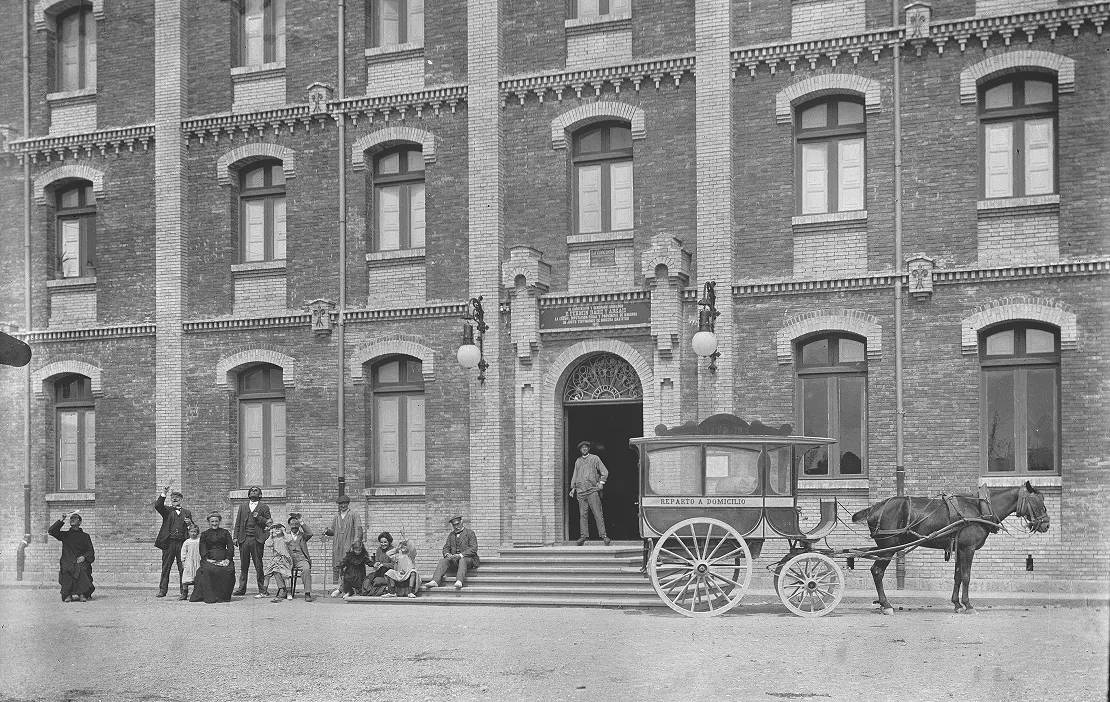
“Solar eclipse from Pamplona (1905)”
AGN. Fot_Martinez_Berasain_377

What is not safe?
Ordinary sunglasses
Ordinary sunglasses are not safe for observing the eclipse, even if they are very dark or from a good brand.
Non-certified materials
Smoked glass, X-rays, CDs, DVDs, floppy disks or black plastic.
Homemade filters
Homemade filters for telescopes, cameras or binoculars.
Devices without specific filters
Binoculars, telescopes or cameras pointed at the Sun without a specific filter on the front.
Damaged eclipse glasses
Eclipse glasses that are broken, bent, scratched or lack manufacturer identification are not safe.
You may put your visual health at risk
Using any of the items listed above can seriously damage the cornea, even without you realising it.
For your health, it is important to follow the guidelines recommended in this section.

And my glasses...
are they safe?
Observing a solar eclipse can be a fascinating experience, but doing so without adequate protection can cause serious and irreversible damage to the retina. For that reason, it is essential to make sure that the glasses being used are specifically designed for this purpose and comply with safety standards.
Appropriate ISO standard
Make sure the glasses clearly state that they comply with standard EN ISO 12312-2:2015. This is the only valid standard for direct observation of the Sun. If they only mention ISO 12312-1, they are not safe for eclipses.
Authentic CE marking
If the glasses were purchased in the European Union, they must bear a legitimate CE marking, backed by laboratory testing. It is not enough for it simply to be printed without justification.
Complete labelling
Check that they include the manufacturer’s name, warnings for safe use, storage instructions and, where applicable, an expiry date.
Physical condition of the filter
Do not use glasses with scratched, bent, loose filters, with lighter areas or any visible defect. Even a small imperfection may allow dangerous light to pass through.
Consult reliable sources
Planetariums, astronomical associations and scientific institutions usually recommend products that have passed quality controls.
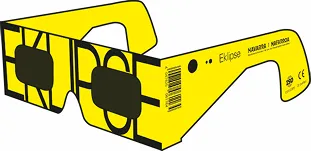
Check your glasses carefully
Make sure they are specifically designed for viewing the eclipse. It is essential that they meet the requirements set out below.
Safe Use Protocol:
The Ground Rule
To ensure full protection, always follow this order when using your eclipse glasses: before looking at the Sun, direct your gaze toward the ground, put the glasses on properly, and only then lift your head to observe the phenomenon.
Likewise, when finishing observation, first look back toward the ground, and once your eyes are protected from direct light, remove the glasses. This simple step prevents accidental exposure of your retina to solar radiation during the adjustment or removal process.
#2
Personal safety
Hydration
Take water with you to stay hydrated. A minimum of two litres per person is recommended. In August temperatures can reach over 35 °C.
External battery
Bring a fully charged power bank for your mobile phone. Networks may become overloaded and your mobile is your only emergency connection.
Flashlight + batteries
Take a torch with spare batteries. Once the eclipse is over, it will be dark and you will need to get back to your car.
Appropriate clothing
Wear light, breathable clothing in the afternoon and an extra layer at night. It will cool down as night falls.
Maps
Download offline maps of the area or use paper maps. Without mobile coverage, GPS will not work.
Medication
If you are taking any medication, bring enough for the day. Local pharmacies may become very busy.
#3
Fire prevention
Parking
Do not park on dry vegetation. The heat from the engine could cause a fire.
Fires
Do not light bonfires, barbecues or use camping stoves. The recreational use of fire in non-urban areas is prohibited.
Cigarette butts
Do not throw cigarette butts onto the ground. Make sure you put them out before disposing of them. Carry a portable ashtray.
Glass
Avoid leaving glass bottles in the sun; they can cause fires.
Waste
Do not throw any rubbish on the ground. Carry bags to collect the rubbish you generate and dispose of it in the bins in your local area.
#4
Transport
Stopping on the shoulder
Do not park on the hard shoulder to watch the eclipse. It is forbidden and it is the highest accident-risk situation.
Planning vs. Improvisation
Avoid unnecessary travel in the hours before or after the eclipse. Where possible, watch the eclipse from your town.
Fuel
Fill up your tank before 10 August. Petrol stations in the area may become very busy.
Unnecessary travel
Avoid driving on forest tracks and country lanes. The lack of signage, lighting and mobile phone coverage seriously endanger your safety.
Official parking
Do not leave your car on the hard shoulder or at farm entrances.
Priority vehicles
Always give wat to emergency vehicles.
#5
Journeys after the eclipse
No rush
Wait at least 30 minutes after the eclipse is over to go back to your vehicle. The roads will be congested.
Perseids
Wait to watch the Perseids: 12 August is the peak of the Perseids meteor shower. If you wait at least an hour after totality to leave, the traffic will have eased considerably.
Flashlight
Have a torch at hand to go back to your car or home.
Car lights on
If you are driving back, switch your headlights on as soon as you leave the car park. It is compulsory in poor visibility.
No stopping on the shoulder
Do not park on the hard shoulder. At night and with heavy traffic, the risk of being hit by a vehicle is very high.
Priority of signs
Follow the instructions given by the authorities at road junctions.